Houston, Texas, USA, May 18, 2026 – From 2018 to 2026, the teams of deugro USA, Germany and Belgium, in cooperation with dteq Transport Engineering Solutions (dteq), successfully completed the delivery of 140 oversized car bodies from Europe to the USA.
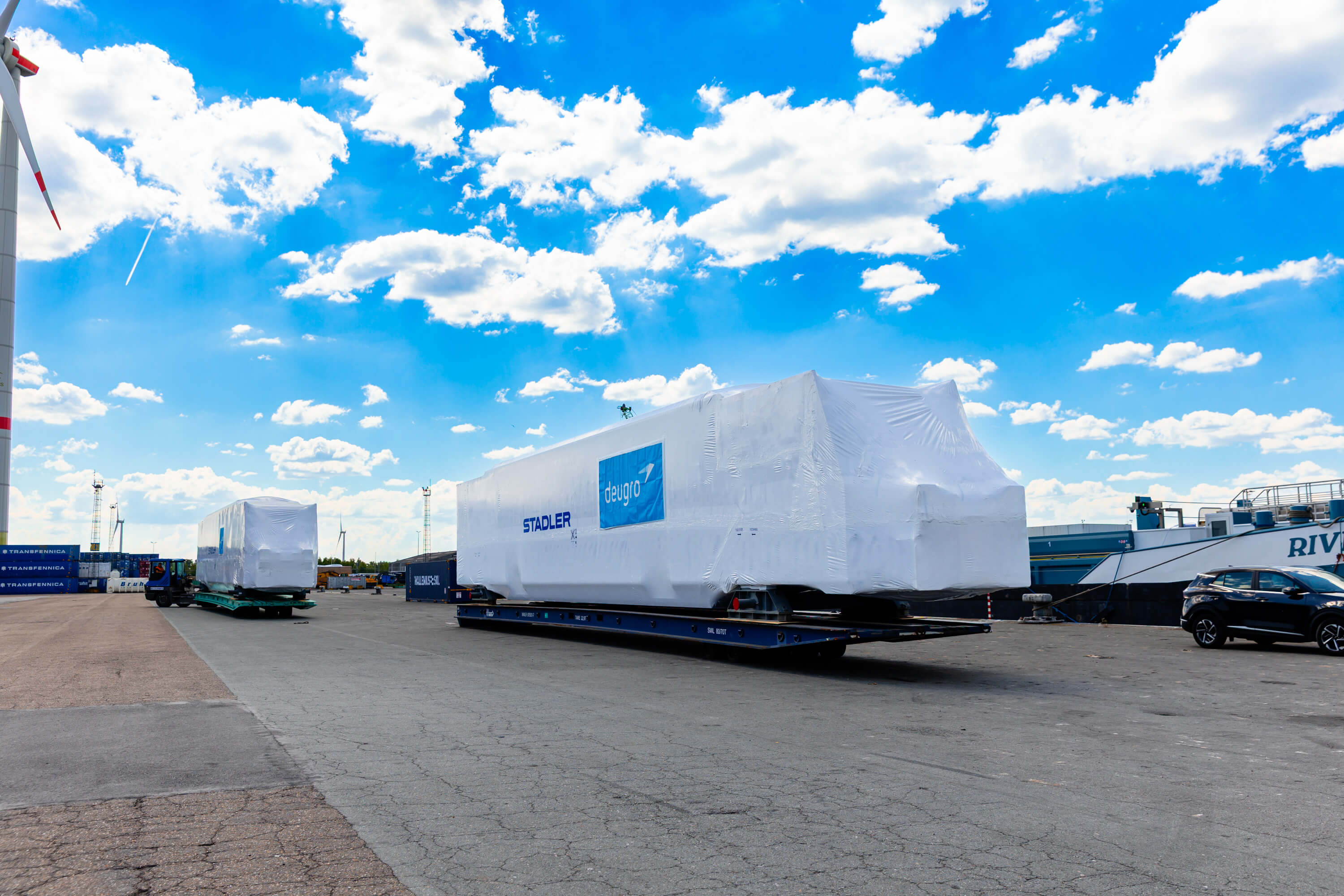
The oversized cargo units each measured 26,070 x 2,994 x 4,770 mm and had weights of up to 19 metric tons. With a total volume of over 28,400 cubic meters and nearly 1,320 metric tons, they were moved by a multimodal combination from end-to-end—by truck, barge, ocean vessel and rail. What started in 2018 turned into an almost decade-long partnership, spanning three US presidencies, a global pandemic, shifting markets and changing production origins. Altogether, these oversized car bodies traveled an impressive distance of over 1.6 million kilometers. That’s the equivalent of flying to the moon and back—twice.
deugro received the award for this project contract thanks to a unique concept solution—developed with the support of dteq—which reduced the client’s freight costs by over 10%. The solution encompassed a complete end-to-end logistics package that included lifting and lashing drawings, individually tailored car body saddles including their export and import from the destination to the origin, as well as engineered method statements covering all transportation modes and handling equipment—from truck and barge, to ocean vessel, to crane movements, to on-carriage by rail.
“To ensure safe and efficient cargo handling across the supply chain—from the manufacturer to the final destination—we engineered and produced customized transport saddles designed for seamless compatibility with every transportation mode and handling equipment, including truck and trailers, barges, ocean vessels, cranes and lifting equipment, as well as rail. These saddles traveled with the units and were later re-imported into the United States for onward handling, ensuring consistent support geometry, minimized handling risks, and full compliance with all round-trip documentation requirements,” said Felix Kok, Regional Director Transport Engineering EMEA, at dteq Transport Engineering Solutions.
Due to the oversized cargo measurements, each end‑to‑end move—from truck to barge, then from ocean vessel to port heavy‑lift crane for transfer to rail for the 2,400-kilometer on-carriage to Salt Lake City—was engineered around one governing constraint: height clearance at every intersection.
While the first car bodies were collected in Switzerland, the majority was later collected from the client’s manufacturing facility in Szolnok, Hungary. Since Budapest’s ports were impractical due to urban restrictions, deugro identified the inland Port of Dunavecse as a suitable alternative, providing the necessary footprint for safe truck-to-barge transloading.
Due to the wide variety of narrow roads, utility lines, traffic lights, roundabouts and high‑voltage rail crossings along the 150‑kilometer route from the production facility to the river port, the safe transportation of the oversized car bodies by truck required extensive planning and preparation. This ranged from detailed route surveys identifying every clearance point to the pre‑positioning of utility crews to lift lines and adjust signals along the route, as well as the arrangement of escort vehicles, support crews and police escorts. In total, more than 100 cable lifts, multiple traffic light removals, several railway crossing adjustments and various traffic‑management measures were necessary. For maximum safety, deugro Hanau in Germany furthermore coordinated closely with the local rail authority to schedule safe, power‑off crossings—carried out over two nighttime runs.
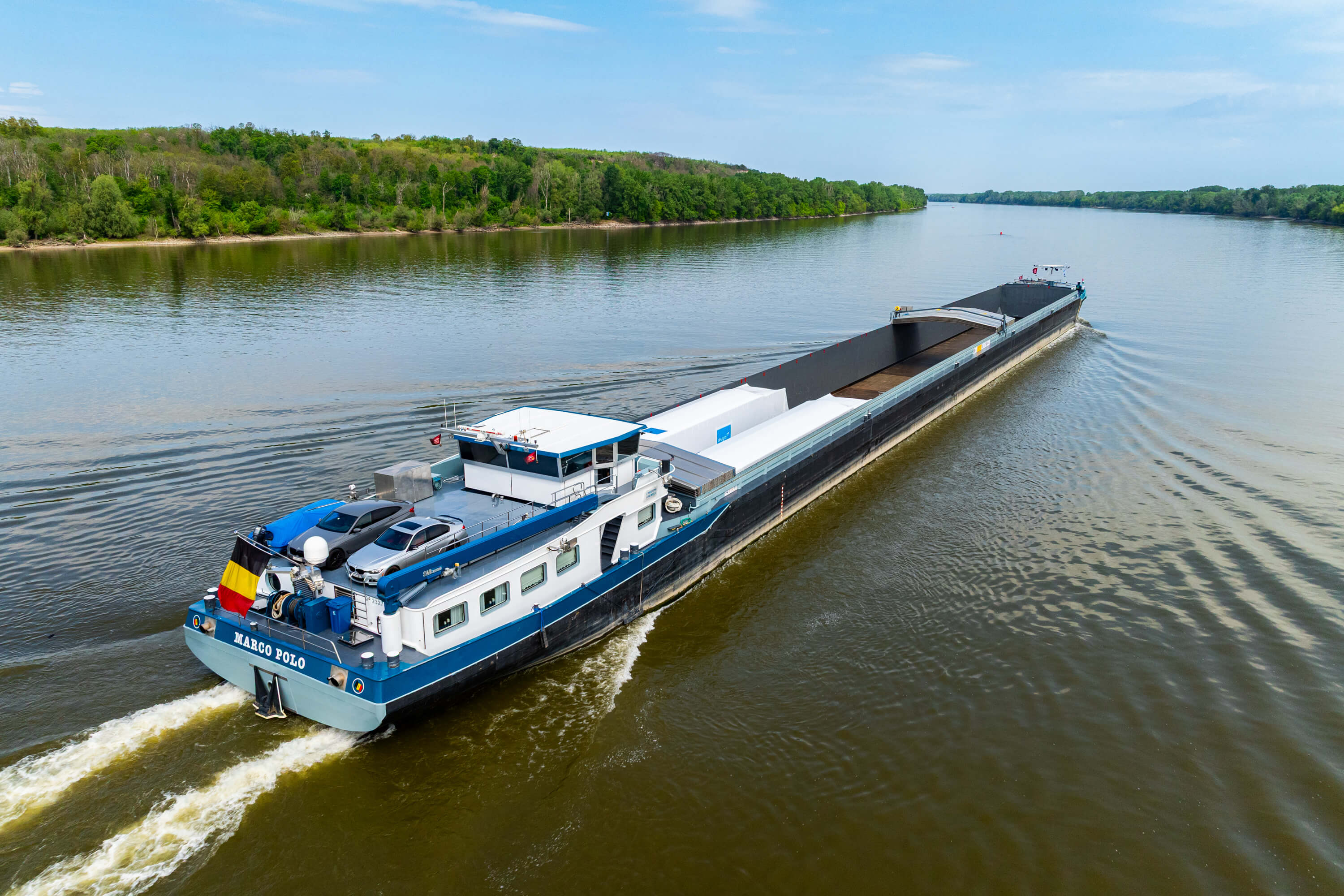
At the barge port, the car bodies were loaded onto barges and shipped via the Danube River and Rhine River to the Port of Antwerp, Belgium. Due to the cargo’s height, barge routing required precise analysis and planning, taking into account all bridge clearance limitations along the inland waterway corridor as well as dynamic water level conditions.
Starting in Dunavecse, the available air draft along the route to Antwerp and later to Zeebrugge was optimized. When operationally required, a transshipment in Antwerp was arranged, as the shorter Antwerp–Zeebrugge leg allowed the use of a barge unit with sufficient capacity for the cargo while still meeting the dimensional restrictions of the narrower channel profiles.
After arrival at the Port of Zeebrugge, Belgium, the car bodies were loaded onto ocean vessels. With over 50% of the cargo required to move on US-flagged vessels—and with limited container options—RO/RO proved to be the best fit. However, due to door clearance restrictions, only three viable US-flagged vessel options remained. Thanks to its long-standing strategic relationships with the carriers, deugro was able to secure the necessary vessel space according to the required schedules. To protect the height profile and saddle pressures, all interfaces—including lash points, deck positions and roll paths—were meticulously planned in close coordination with dteq’s engineers.
“Due to the variety of the various transportation modes and the large number of transshipment points involved, precise scheduling and process planning were of the utmost importance. Only by strict adherence to the project schedule could a smooth, delay-free supply chain be ensured. This was particularly important for barge transport from the production facility to the seaport, to ensure the timely arrival of cargo units before ocean vessels departed, thus guaranteeing on-schedule loading,” said Natasha Sperandio, Senior Project Coordinator at deugro Houston, Texas, USA.
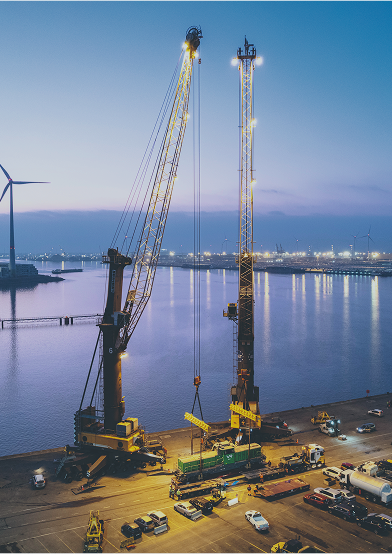
After arrival at Galveston Port in Texas, the car bodies were discharged according to plan. At the constrained terminal, a tailored heavy-lift concept was required to keep the car bodies level and prevent saddle deformation. In the absence of a 62-ft spreader bar, a dedicated lift plan was developed in collaboration with dteq, followed by the rental and assembly of the necessary rigging. With Ports America operating a single working pier supported by three active cranes, the handling sequence was carefully coordinated to minimize dwell time and operational disruption.
Due to bridge and tunnel restrictions, which made long haul road transport impossible, the final leg to Salt Lake City was routed by rail. By moving north past Cheyenne, Wyoming, the route bypassed a narrow tunnel in Colorado and ensured that the required height envelope could be maintained throughout the journey. This ensured that all car bodies were delivered safely and on time.
“This was a complex, multimodal scope with a high volume of units and many transshipment intersections over eight years. By working as one team—deugro, our client and our subcontractors—guided by disciplined planning and personally attended coordination, we minimized schedule impacts and achieved the result our client expected. The success of this effort has now paved the way for a strong, long-term partnership,” said Natasha Sperandio, Senior Project Coordinator at deugro Houston, Texas, USA.